
Introduction
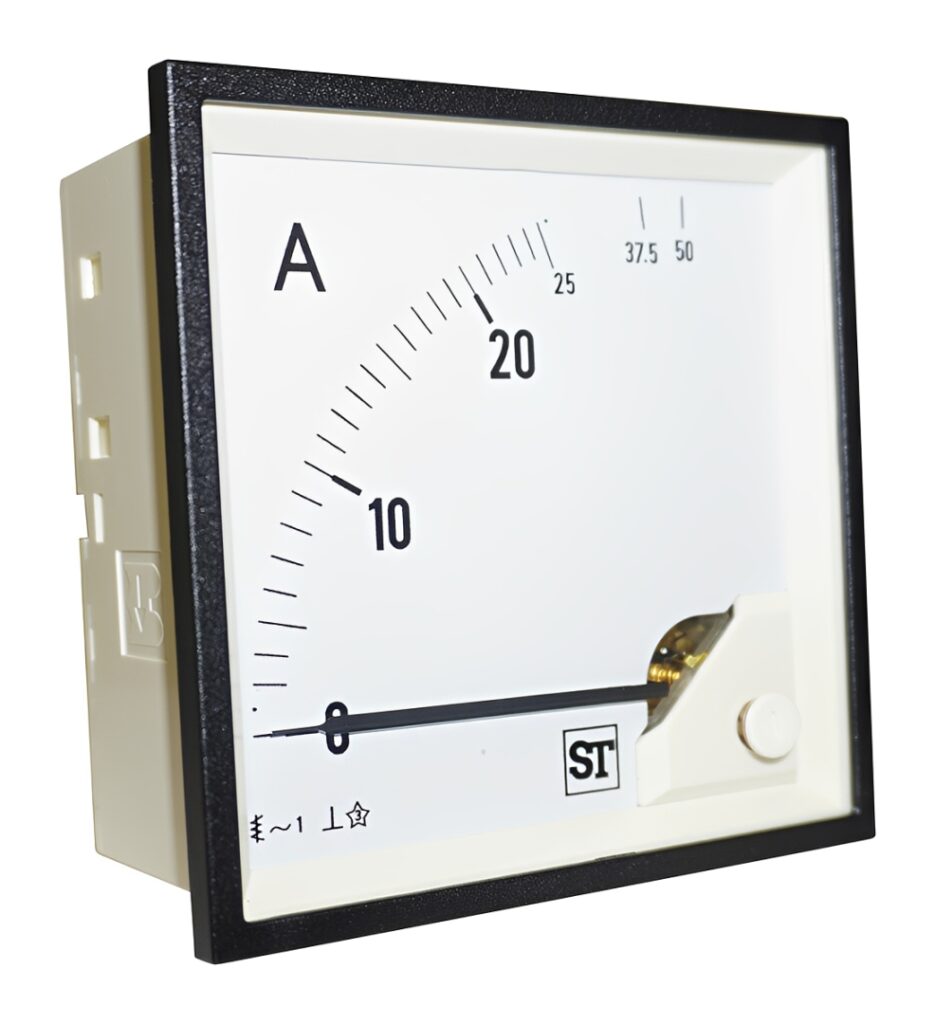
A Sifam Tinsley Analogue Ammeter helps technicians, engineers, and panel builders monitor current flow with a clear pointer-based display. It remains a practical choice for electrical systems where quick visual readings, stable performance, and simple operation are essential.
The Sifam Tinsley Analogue Ammeter is widely used in control panels, machinery, test benches, maintenance workshops, and industrial electrical installations. Because it directly shows current movement, it supports safer decisions during inspection, testing, and troubleshooting.
What Makes an Analogue Ammeter Useful?
An analogue ammeter measures electric current and displays the reading on a calibrated scale. Instead of showing only the changing digits, it uses a moving pointer to help users understand the current behaviour more naturally.
This is useful when the current rises, drops, or fluctuates under load. For example, when checking cables, connectors, fuses, switches, contactors, controllers, or capacitor circuits, pointer movement can reveal changes that need attention.
Why Sifam Tinsley Analogue Ammeter Is Trusted
A Sifam Tinsley Analogue Ammeter is trusted for consistent current monitoring in professional electrical environments. Its simple face, clear scale, and responsive pointer help users read values quickly.
In many industrial systems, operators do not always need advanced digital functions. Instead, they need a dependable instrument that shows whether the current is within a safe operating range. This is where an analogue ammeter provides real value.
Key Benefits for Electrical Panels
Electrical panels require clear monitoring devices to support safe and efficient operation. A panel-mounted ammeter helps users check load current without opening circuits or relying only on hidden diagnostic systems.
Important benefits include:
- Clear current indication during operation
- Quick visual checking for overload signs
- Simple use for operators and technicians
- Strong support for preventive maintenance
- Helpful readings during commissioning
- Practical monitoring for control and power circuits
These benefits make the meter useful in systems with contactors, switches, fuses, controllers, sensors, and other panel components.
How It Supports Troubleshooting
Troubleshooting becomes easier when technicians can compare the expected current with the real-time current. If the pointer stays too low, the circuit may have an open connection, a weak supply, a damaged cable, or a loose connector.
If the pointer rises too high, the system may experience an overload, a short circuit, an incorrect load, or a failing component. Therefore, an ammeter gives fast clues that can guide the next inspection step.
This is especially helpful in electronics and automation work involving sensors, LEDs, microcontrollers, microprocessors, controllers, and capacitor-based circuits. Small current changes can often point towards bigger electrical problems.
Applications Across Industrial Systems
The Sifam Tinsley Analogue Ammeter can support many types of applications. It is commonly used where the current needs to be visible and easy to understand during normal operation.
It can be used in:
- Electrical control panels
- Industrial machinery
- Power supply systems
- Test and measurement benches
- Battery and charger circuits
- Workshop repair stations
- Educational electrical training setups
In each application, the meter helps users observe how the circuit behaves under real working conditions.
Role in Electrical Safety
Safety is one of the biggest reasons to monitor current. Excessive current can create overheating, cable damage, fuse operation, contactor wear, or failure in connected electronics.
A Sifam Tinsley Analogue Ammeter helps identify abnormal current levels before they create serious risks. When readings fall outside the expected range, technicians can investigate the circuit to reduce the risk of damage.
This is important in systems that include cables, connectors, switches, fuses, contactors, thermal components, and controllers. Stable current monitoring supports both equipment protection and workplace safety.
Why Pointer Movement Matters
Pointer movement gives more than just a number. It shows the circuit’s behaviour. A smooth pointer may indicate stable operation, while a shaking or rapidly moving pointer may suggest unstable load conditions.
For this reason, analogue ammeters are useful when monitoring motors, power supplies, control circuits, and test equipment. The user can quickly recognise whether the current is steady or changing.
In electronics testing, this can help when working with LEDs, sensors, microcontrollers, microprocessors, laptops, capacitors, and other sensitive devices. A visual trend can make diagnosis easier and faster.
Choosing the Right Meter for the Job
Before selecting a Sifam Tinsley Analogue Ammeter, users should check that the meter suits the circuit and installation. Choosing the wrong range or format can affect accuracy and safety.
Important selection points include:
- Current rating and measurement range
- AC or DC application type
- Panel mounting size
- Scale layout and readability
- Need for a shunt or current transformer
- Operating environment
- Safety and compliance requirements
Additionally, the installation location should allow clear viewing. An easy-to-read meter helps operators respond faster during operation.
Installation and Care Tips
Correct installation helps the ammeter work reliably. The wiring should follow the system design, and connections should be secure. Loose cables or poor terminals can cause inaccurate readings and safety concerns.
Regular care is also important. Technicians should keep the meter face clean, check pointer movement, inspect surrounding wiring, and ensure nearby connectors remain tight.
In industrial areas, tools, grips, oils, dust, vibration, heat, and thermal pads may be part of the working environment. Good panel protection helps prevent these factors from affecting the meter or wiring.
Value for Maintenance Teams
Maintenance teams need instruments that support fast decisions. A Sifam Tinsley Analogue Ammeter gives an immediate view of current conditions, helping teams identify problems before downtime occurs.
During routine checks, technicians can compare readings with normal operating values. If the current changes over time, it may indicate worn contactors, ageing cables, overloaded circuits, failing switches, or damaged components.
This makes the ammeter useful not only for live monitoring but also for long-term equipment reliability.
Final Thoughts
A Sifam Tinsley Analogue Ammeter is a dependable instrument for current monitoring in industrial, electrical, and electronics applications. It provides clear readings, supports safer panels, and helps technicians quickly understand current behaviour.
From cables, connectors, fuses, switches, contactors, sensors, controllers, LEDs, capacitor circuits, microcontrollers, microprocessors, and laptops to workshop tools and maintenance equipment, accurate current monitoring improves performance and ensures safer operation.