Introduction
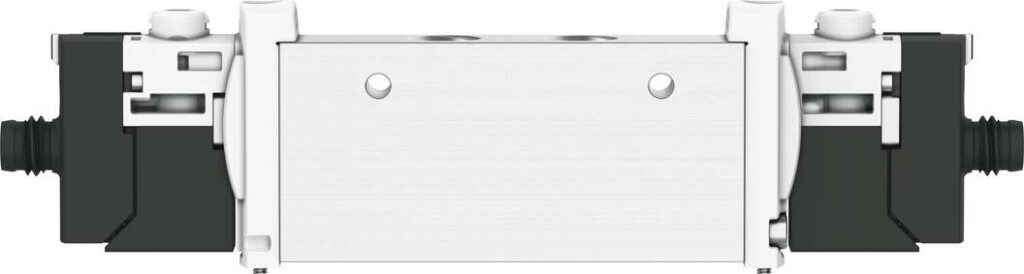
A VUVG Pneumatic Solenoid Valve provides electrically controlled airflow for compact automation systems. It allows a controller to pressurise, isolate, redirect, or exhaust pneumatic lines so cylinders, grippers, vacuum devices, and air nozzles operate in a planned sequence.
Festo offers the VUVG family in several valve functions, sizes, flow capacities, voltages, connection styles, and reset arrangements. Therefore, engineers should select the complete part number according to the circuit rather than appearance alone.
What Makes the VUVG Range Suitable for Modern Machines?
The VUVG platform combines compact dimensions with flexible pneumatic and electrical integration. Depending on the version, it can operate individually, in a semi-in-line arrangement, or within a compatible valve terminal.
This flexibility helps machine builders place control close to the actuator. Shorter air paths can reduce delay, improve response, and organise equipment within restricted spaces.
How Does Electrical Switching Control Compressed Air?
When the solenoid receives the specified command, magnetic force operates the valve mechanism or pilot stage. The internal spool or poppet then changes position and opens the required flow paths.
When the signal ends, a monostable version returns through a mechanical or pneumatic spring. A bistable configuration can remain in its last state until the opposite command is applied.
Suitable DIN 43650 Solenoid Connectors may support compatible valve connections, but installers must confirm the plug format, voltage, pin arrangement, and protection requirements.
Which VUVG Valve Function Should Be Selected?
A 3/2-way function has three ports and two positions. It commonly controls single-acting actuators, vacuum ejectors, and air-blow functions.
A 5/2-way valve alternates pressure between two working ports for double-acting cylinders. A 5/3-way version adds a centre state that may block, exhaust, or pressurise selected paths according to its pneumatic symbol.
Because the centre and rest positions influence machine behaviour, designers should study the symbol and datasheet before connection.
Why Do Coil Connections and Voltage Matter?
Reliable switching depends on the correct voltage, power consumption, duty cycle, polarity, cable protection, and controller output.
Compatible Pneumatic Solenoid Coil Connectors can create secure connections where their form matches the VUVG assembly. A similar-looking connector is not automatically interchangeable.
Poor wiring or an unstable supply can cause delayed actuation, intermittent switching, or overheating.
How Does Pressure Regulation Improve Performance?
A VUVG valve needs stable inlet pressure and sufficient flow during peak demand. Excess pressure increases air consumption and stress, while low pressure may cause slow or incomplete movement.
Correctly selected Pneumatic Pressure Regulators help establish the required pressure. They must also provide enough flow so pressure does not collapse when several devices operate together.
Pressure should be checked during movement because a static reading may hide restrictions.
How Can Safe Isolation Support Maintenance?
Pneumatic circuits can retain energy after electrical power is removed. Before maintenance, technicians must isolate the supply and release stored downstream pressure.
Suitable Pneumatic Shut-Off Valves can create a defined isolation point. Engineers must still consider trapped air, suspended loads, non-return devices, and movement after pressure release.
How Can Pressure Monitoring Improve Diagnostics?
Pressure monitoring can reveal leakage, blocked filters, undersized lines, or unexpected air demand before these issues disrupt production.
Appropriate Pressure Sensor Controllers can process compatible sensor signals and provide switching or monitoring outputs. Their input type, pressure range, and electrical output must match the application.
This feedback helps a PLC identify low-pressure conditions before an actuator misses its target.
Where Are VUVG Valves Commonly Used?
VUVG valves support compact pneumatic control in:
- Packaging and labelling machines
- Pick-and-place equipment
- Robotic grippers and tooling
- Automated assembly stations
- Sorting and material-handling systems
- Test and inspection equipment
- Vacuum generation circuits
- Air-blow and cleaning processes
The configuration should match required flow, cycle speed, pressure, electrical connection, and environmental conditions.
How Can Local Status Indication Help?
Suitable Pneumatic Visual Indicators provide a simple local reference for pressure or pneumatic status. They can improve commissioning and fault finding when installed where technicians can view them safely.
These indicators complement gauges and electronic sensors but do not replace verified isolation or pressure measurement.
Can Pneumatic Timing Support Simple Sequences?
Most VUVG installations use PLC timing, but some local circuits may use pneumatic delay devices for straightforward sequencing.
Compatible Pneumatic Timers can delay an airflow event when their timing range, pressure, and logic suit the process. Electronic control remains preferable where timing changes frequently.
What Specifications Should Buyers Compare?
Before ordering, confirm:
- Valve function and pneumatic symbol
- Monostable or bistable operation
- Normal and centre positions
- Nominal flow capacity
- Operating and pilot pressure
- Voltage and electrical interface
- Port and tube connection sizes
- Individual or manifold mounting
- Manual override arrangement
- Temperature and protection rating
The tubing, exhaust path, regulator, and actuator must also support the intended response.
How Should a VUVG Valve Be Installed and Maintained?
Install the valve according to its marked ports and mounting instructions. Protect open connections from contamination and avoid cable or tubing strain.
During commissioning, verify voltage, pressure, rest position, manual override, and actuator direction. Pressurise the system gradually and test every operating state safely.
Inspect for leakage, damaged wiring, slow switching, contamination, loose connections, and restricted exhaust. Always isolate electrical power and compressed air before removing the valve.
Why Choose the Correct VUVG Pneumatic Solenoid Valve?
The correct VUVG Pneumatic Solenoid Valve provides compact installation, responsive control, flexible valve functions, and reliable automation integration. It can improve machine organisation and switching consistency when supporting components are sized correctly.
Successful selection depends on matching the function, flow, voltage, pressure, reset method, connection, and mounting style to the application. With clean air, safe installation, and regular inspection, the VUVG can deliver dependable control across demanding industrial cycles.