
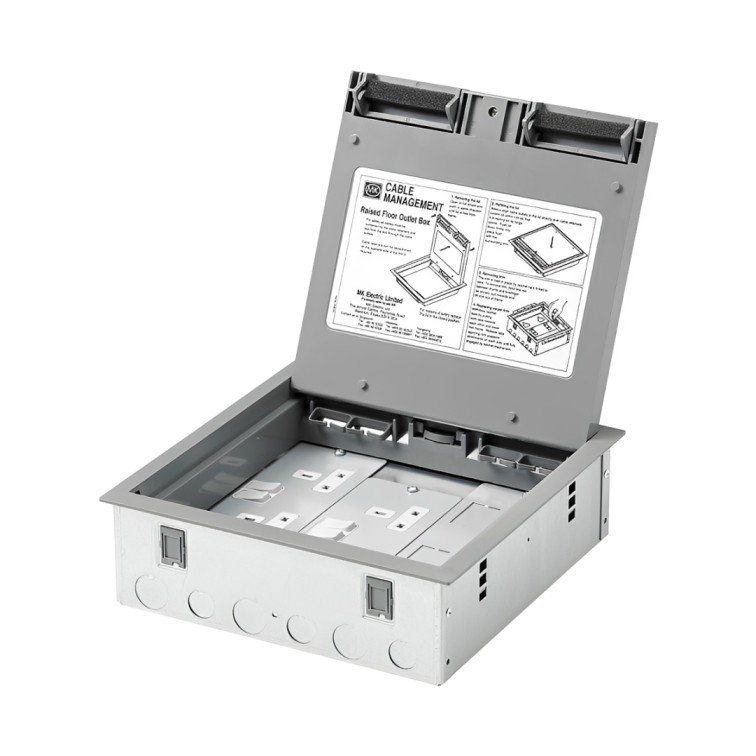
MK Electric Floor Box: A Practical Guide for Safer Power Access
An MK Electric Floor Box helps you bring power and data exactly where people need it, without trailing cables across walkways. Because modern offices, retail spaces, and meeting areas rely on electronics, laptops, and connectors, floor-level access can keep layouts flexible while supporting everyday safety and performance.
In addition, a well-chosen floor box supports cleaner cable management, protects wiring, and improves the overall finish of an installation. If you are specifying one for a new project or replacing an older unit, it is worth understanding how these systems work and what details matter most.
Why choose an MK Electric Floor Box for modern installs?
Floor boxes are designed for convenience, but the best options also support durability and compliance. MK is widely recognised for robust electrical accessories, so an MK Electric Floor Box is often selected for projects where reliability and long service life matter.
Moreover, floor boxes can reduce clutter by routing cables underfloor, so workspaces stay organised and easier to maintain. That matters in high-footfall areas where loose cables can become hazards.
Cleaner cable routing and easier space planning
When power is only available at walls, layouts get restricted. However, floor access supports open-plan design and flexible furniture placement.
Common planning benefits include:
- Shorter cable runs to desks and islands, which can reduce visible clutter
- Improved organisation for power and data connectors under a single access point
- Easier reconfiguration for changing layouts, teams, and equipment
Practical safety improvements in busy areas
A floor box can reduce trip risks by keeping cables managed and routed correctly. In addition, a covered unit protects outlets from accidental impact and limits exposure to dust and debris.
When you consider safety in public-facing areas, also think about how accessories such as fuses, switches, and protective covers contribute to safer day-to-day use.
Key components and how they work together
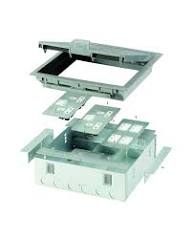
To select the right unit, it helps to understand what is inside and around the box. While configurations vary, most floor boxes include a housing, lid or cover, internal mounting support, and space for outlets and modules.
The enclosure and lid design
The enclosure sits in or on the floor, depending on the installation type. The lid helps protect sockets and reduces the chance of debris entering the unit. In addition, good lid design supports smoother cable exit and helps prevent pinching.
Look for features that support:
- Strong mechanical protection in high-use zones
- Stable closure with a neat finish
- A cable outlet that supports tidy routing without strain
Outlets, modules, and compatible connectors
An MK Electric Floor Box may be configured for power sockets and, in some cases, data modules depending on the system. This is useful where you need both mains power and low-voltage connections for devices.
Because many spaces rely on electronics and networked equipment, a floor box can help support:
- Laptop charging and workstation power
- Data connectivity for meeting rooms
- Power for tools used in pop-up work areas or service zones
Selecting the right floor box for your flooring type
Different floors need different approaches, so match the product to the environment. For example, raised access floors, concrete screeds, and tiled finishes each have different constraints around depth, mounting, and finishing.
Raised floors and modular office spaces
Raised floors often suit floor boxes because cables can route easily below the panels. In addition, access for maintenance can be simpler, which supports long-term flexibility.
Consider:
- Box depth and clearance below the panel
- The stability of mounting so sockets stay secure
- How the lid sits flush to reduce rocking or snagging
Solid floors, screeds, and refurbishment projects
For solid floors, planning is essential because cut-outs and containment must be set early. However, refurbishment can still be practical if you have access to suitable trunking and floor build-up.
Also check:
- The space needed for cables and bends
- Moisture and dust exposure risks
- How the finished lid aligns with the surrounding surface
Performance considerations for busy commercial use
In demanding environments, it is not just about fitting sockets into the floor. Instead, consider daily wear, thermal conditions, and the wider electrical system.
Load, heat, and thermal management
Where multiple devices plug in, heat can build up, especially in enclosed spaces. While a floor box is not a heat source itself, it can sit near cables and devices that generate warmth.
To manage thermal conditions, consider:
- Sensible circuit design and correct rating
- Avoiding overcrowding of cables in tight voids
- Ensuring ventilation and clearance where possible
In some technical builds, components like thermal pads may be used elsewhere in equipment to manage heat, although they are not typically part of the floor box itself. Still, thinking about thermal behaviour supports better overall system reliability.
Protection and control elements in the wider system
A floor box works as part of a bigger electrical setup, so protection and control matter. Upstream devices such as contactors and protective devices support safe operation under load.
Depending on the installation, you may also see:
- Local isolation switches for maintenance
- Correctly specified fuses to protect circuits
- Clear labelling for safety and servicing
Installation tips that improve reliability and maintenance
A great product can still perform poorly if installed without planning. Therefore, focus on neat routing, correct strain relief, and accessible servicing.
Cable organisation and strain relief
Cables should exit smoothly without sharp bends. In addition, allow enough slack for servicing without leaving loops that snag.
Good practices include:
- Grouping power and data cables neatly to avoid interference
- Using the correct grips and grommets for cable exit points
- Keeping connectors protected from dust and foot traffic
Keeping the box clean and serviceable
Over time, floor boxes can collect debris. However, regular checks and sensible placement help reduce problems.
To support long-term maintenance:
- Choose a position away from spills and heavy cleaning zones when possible
- Ensure the cover closes properly after changes
- Keep module layouts tidy so technicians can work quickly
Where an MK Electric Floor Box fits best
Floor boxes are particularly useful where people gather around central tables, displays, or multi-use zones. They can also support retail counters, reception areas, and training rooms where power demand changes.
Common use cases include:
- Meeting rooms with laptops, chargers, and presentation electronics
- Retail displays with LEDs and powered signage
- Workstations that use controllers, sensors, or test tools
- Light industrial benches that rely on safe, accessible power
In more advanced environments, connected equipment may include microcontrollers and controllers that run automation tasks. While these devices are not part of the floor box, reliable power access supports their stable operation.
How to specify the right configuration for your project
To make the product relevant to your application, start with the actual use case and work backwards. Consider what devices will be connected, how often plugs will be used, and how the space may change over time.
A clear specification process includes:
- Estimating how many power outlets you need now and later
- Planning cable routes for both power and data connectors
- Checking floor depth and installation constraints early
- Ensuring safety requirements are met through proper protection and layout
Also think about the types of electronics on site. If the space supports equipment with capacitors, microprocessors, or sensitive devices, stable power distribution and good cable management can reduce avoidable faults and downtime.
Final thoughts
An MK Electric Floor Box can make a workspace safer, cleaner, and more adaptable by bringing power exactly where it is needed. When you match the box type to the floor, plan cable routing properly, and consider long-term maintenance, you create a professional installation that supports modern electronics, connectors, and day-to-day productivity.