
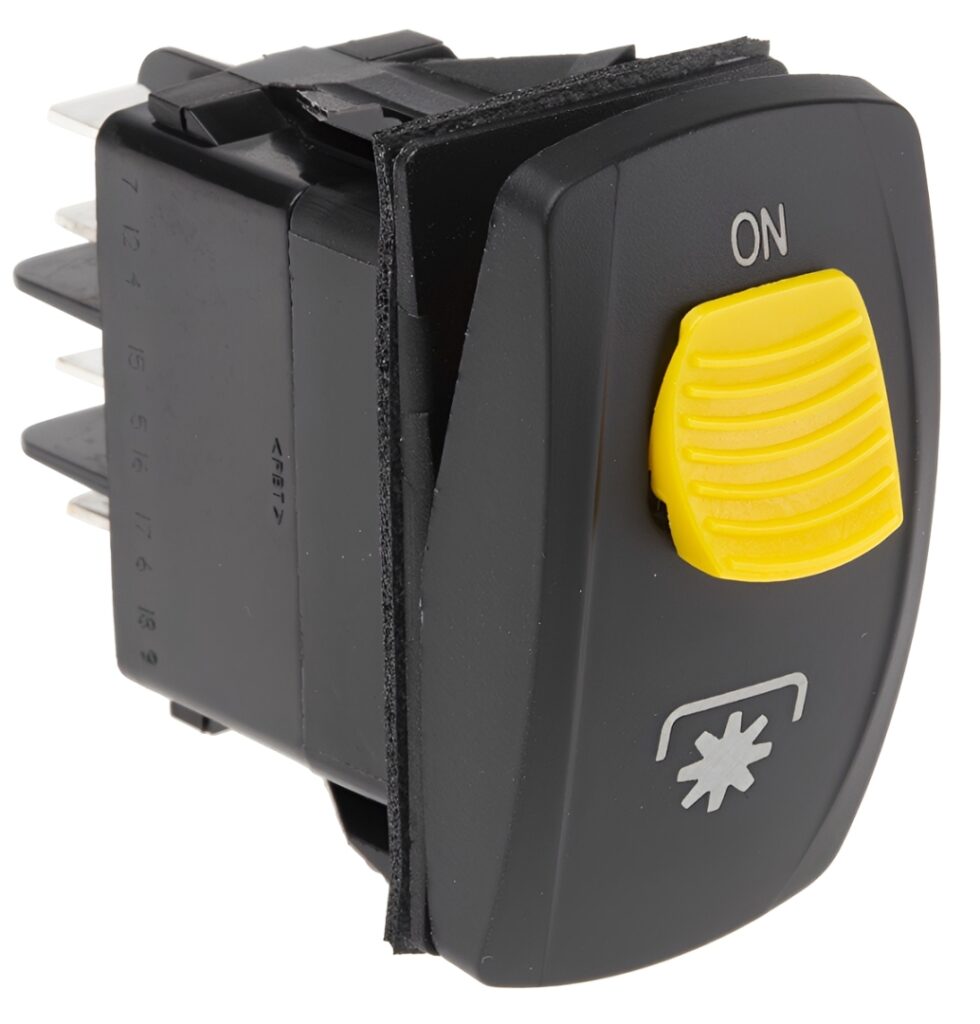
Carling DPDT Rocker Switch: What You Need to Know
A Carling DPDT Rocker Switch is a rugged, panel mount control that changes how power is routed through a circuit. It is popular in dashboards and control panels because the rocker is easy to use and built to handle frequent switching.
DPDT means double pole, double throw. In simple terms, you switch two separate circuits at once, and each circuit can connect to one of two outputs. That makes DPDT rockers useful for reversing a DC motor, swapping between two loads, or selecting between two sources in compact electronics.
How a DPDT Rocker Switch Works
DPDT switching explained in plain terms
A DPDT rocker moves internal contacts when you press the actuator. Each pole has a common terminal that connects to one of two throws, depending on rocker position. Because both poles move together, you can change two lines at the same time, which keeps control wiring simple.
Common switch functions you may see
Carling DPDT rocker models often come in multiple action styles:
• ON OFF ON for two direction or two output selection
• ON ON for changeover without a centre stop
• Momentary options for jog control
• Illuminated versions using LEDs for status visibility
Where Carling DPDT Rocker Switches Fit Best
Vehicles, marine, and mobile equipment
A Carling DPDT Rocker Switch is widely used in automotive and marine panels for actuators, pumps, trims, and accessory circuits. In wet or corrosive areas, sealed or splash resistant versions help improve safety and reduce failures. Good cable protection, proper connectors, and strain relief also prevent loose terminations over time.
Industrial and panel build electronics
In industrial electronics, DPDT rockers are used for direction control, manual overrides, and changeover functions on controllers. They sit neatly alongside fuses, indicator LEDs, sensors, contactors, and other switches, giving operators clear control without complex hardware.
Choosing the Right Carling DPDT Rocker Switch
Match electrical ratings to the load
Identify the load type and current draw first. Motors and solenoids can create inrush current, so choose a switch with headroom above the normal running current. Also confirm AC versus DC ratings, since DC switching can be more demanding at the same current.
Check terminal style and wiring approach
Pick terminals that fit your build method and service needs:
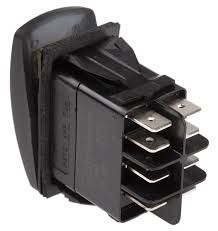
• Quick connect spades for fast assembly
• Solder lugs for compact wiring
• Screw terminals on some variants for field work
Route cables neatly, avoid tight bends, and keep wiring away from heat. If the enclosure is crowded, allow space for airflow so temperature rise stays under control, especially near thermal sources.
Decide on illumination and visibility needs
Illuminated rockers help in low light. Verify lamp voltage, wiring requirements, and whether the LED is tied to the output or powered independently. If you already use external indicator LEDs, a non illuminated rocker may be easier to wire.
Practical Wiring Tips for DPDT Rocker Switch Installations
Use the correct terminal diagram
DPDT terminals are often two rows of three. The middle terminals are commonly the commons, with the top and bottom as throws, but layouts can vary. Follow the datasheet diagram, label each cable, and keep a simple sketch for maintenance.
Protect the circuit and reduce contact stress
Use an appropriately rated fuse close to the power source to protect cabling. For inductive loads, add suppression where suitable, such as a diode across a DC coil, to reduce arcing and extend contact life.
If the switch feeds microcontrollers, apply debouncing in software or with a small RC network for cleaner signals, especially in noisy environments.
Support mechanical reliability
Use the correct panel cutout, tighten hardware evenly, and add strain relief so terminals do not carry cable weight. In environments with vibration, dust, or oils, select a suitable sealed option. Use the right tools for assembly and maintain firm grips, but avoid over tightening that can damage plastics.
Design Considerations for Modern Electronics
Noise, heat, and control signals
When a DPDT rocker is used as an input device rather than a power switch, it may feed a low voltage control circuit on a PCB. In that case, treat it like any other signal source for electronics. Keep the switch wiring away from high current cables, add basic filtering if needed, and ensure your controllers read clean transitions.
If a board uses microprocessors or microcontrollers, switch bounce can create multiple transitions. Software debouncing is often enough, but a small capacitor and resistor can also stabilise the input. Pairing this with good grounding and tidy connectors helps reduce electrical noise.
Thermal and maintenance planning
In compact enclosures, heat management matters. Keep power components spaced apart, and if heat sinks or drivers are present, use thermal pads where appropriate. Even if the rocker itself is not the hot part, nearby heat can age plastics and insulation, so route cables with a little breathing room.
Design for service by leaving access for replacing fuses, unplugging connectors, and testing circuits with portable equipment, including laptops used for diagnostics.
Final Thoughts
A Carling DPDT Rocker Switch is a dependable solution when you need intuitive direction control or circuit changeover. When you match ratings to the load, build tidy wiring with quality connectors, and protect circuits with fuses and sensible thermal planning, you get reliable switching that lasts.